
News & Insights
2026年2月2日
Why Your Lab Needs an Automatic Glassware Washer in 2026: Efficiency, Safety, and Validation
Upgrade your lab efficiency with an automatic glassware washer. Learn about cleaning validation, water consumption, and how to choose the right lab washer for 2026.
In the modern laboratory, precision is everything. While researchers spend thousands of dollars on high-purity reagents and state-of-the-art analytical instruments like PCRs and Spectrophotometers, one critical factor is often overlooked: the cleanliness of the glassware.
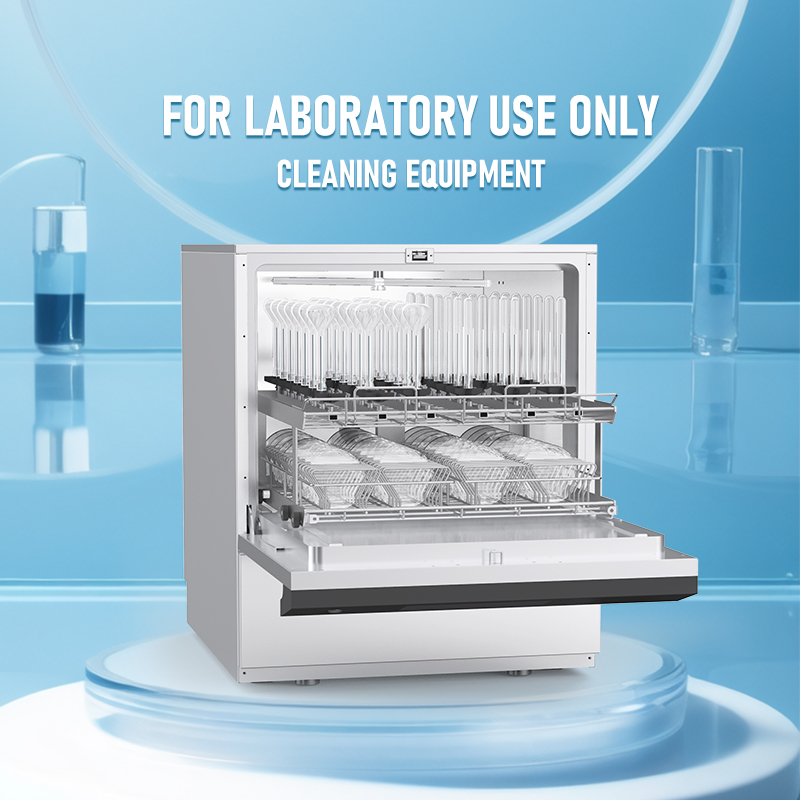
Manual washing is no longer sufficient for high-stakes research. In 2026, an Automatic Laboratory Glassware Washer is not just a luxury; it is a necessity for ensuring reproducible results and laboratory safety.
1. Manual Washing vs. Automatic Washing: The Hidden Risks
Many labs still rely on manual scrubbing, but this method introduces significant variables:
- Inconsistent Results: Residual detergents or proteins can interfere with sensitive assays.
- Safety Hazards: Manual handling increases the risk of glassware breakage and exposure to hazardous chemicals or pathogens.
- Resource Drain: Highly skilled technicians spend hours at the sink instead of performing high-value research.
Automatic washers eliminate these risks by providing standardized, programmable cycles that ensure every piece of glass—from beakers to volumetric flasks—is chemically clean.
2. Key Technical Features to Look For
When selecting a glassware washer for your facility, focus on these SEO-critical performance factors:
- Professional Injection Cleaning: Look for systems that use "injection lances" to clean the inside of narrow-necked bottles and pipettes, ensuring $360^\circ$ coverage.
- High-Temperature Disinfection: For biological labs, the ability to reach $93^\circ\text{C}$ (Thermal Disinfection) is essential for achieving a high level of safety and sterility.
- Efficient Drying (HEPA Filtered): Modern washers feature forced-air drying. Ensure the air is HEPA-filtered to prevent re-contamination during the drying phase.
- Water Quality Integration: Does the washer support deionized (DI) or ultrapure water for the final rinse? This is crucial for analytical chemistry and trace analysis.
3. Compliance and Validation (GLP/GMP)
For pharmaceutical and clinical labs, "Cleanliness Validation" is mandatory. Automatic washers provide:
- Data Logging: Exportable cycle reports showing temperature, time, and detergent dosage.
- Standardized SOPs: Easily repeatable cleaning protocols that pass regulatory audits with ease.
4. Sustainability: Saving Water and Energy
Modern lab washers are designed with eco-friendliness in mind. Compared to a running tap, an automatic washer can reduce water consumption by up to 50%. By optimizing detergent dosing and heating cycles, these machines significantly lower the lab's environmental footprint.